Fashion Show Dress: A Designer’s Practical Review
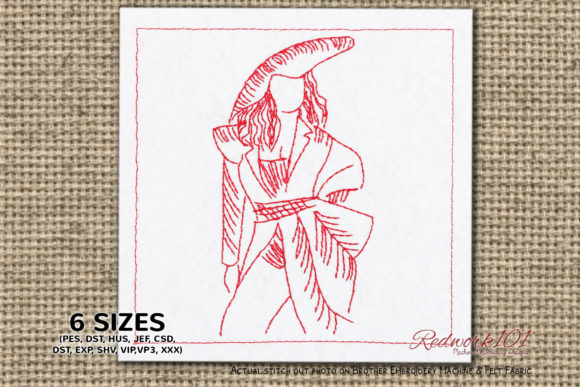
As a designer who spends more time staring at stitch maps than finished garments, I have learned to be skeptical of "chic" claims. We see thousands of machine embroidery design files pass through our screens, promising elegance but often delivering clutter. When I first loaded the Fashion Show Dress file into my editing software, I was looking for clarity. What I found was a splendid redwork piece that genuinely understands the power of negative space. This is not just another generic silhouette; it is a deliberate study in line and form that respects the limitations and strengths of modern home embroidery machines.
First Impressions: Mood and Visual Personality
The immediate mood of this design is sophisticated yet playful. Redwork, by its nature, relies on a single thread color against a contrasting background, which forces the design to stand or fall on its outline quality. Fashion Show Dress succeeds because the lines are confident. There is no hesitation in the curves of the gown or the posture of the figure. For an experienced eye, this suggests a well-digitized path where jump stitches are minimized, and travel moves are logical.
The visual personality here is versatile. It feels equally at home on a high-end boutique label as it does on a casual craft fair item. The lack of dense fill stitches means the fabric breathes, maintaining its natural drape. This is crucial when we consider that this is intended for Clothing and accessories. A heavy, dense design can turn a soft cotton tee into a stiff board, but this redwork approach preserves the hand-feel of the material. The optional Box Stitch mentioned in the description is a smart addition for those who want a framed, poster-like effect, but I recommend testing it without the frame first to appreciate the clean minimalism of the dress silhouette itself.
Real-World Application: From Mockup to Market
To truly evaluate a design, you must imagine it in a real-life scenario. I recently worked on a project for a client launching a small line of canvas tote bags. They wanted something that screamed "fashion-forward" without looking like a corporate logo. Fashion Show Dress was the perfect candidate. Because redwork uses primarily running stitches or simple satin borders, it stitches out quickly. This speed is vital for a craft business or an Etsy seller who needs to manage production time per unit.
I tested the design on a natural unbleached canvas tote. Using a deep burgundy thread instead of traditional bright red gave it a vintage, artisanal feel. The result was striking. The design did not overpower the bag; instead, it acted as a wonderful accent, exactly as described. It elevated a simple $5 tote into a $35 handmade product. This is the kind of value addition that defines successful small shop product lines. The design’s simplicity allows it to scale well, meaning you can shrink it for a pocket detail on a shirt or enlarge it for a pillow cover without losing integrity, provided you stay within reasonable hoop limits.
Versatility Across Product Categories
Beyond totes, this embroidery file shines in several other areas:
- Custom Apparel: It works beautifully on sweatshirt embroidery projects. Placed on the upper left chest, it adds a subtle branding element for fashion bloggers or boutique owners.
- Baby Embroidery: While the theme is adult-oriented, the clean lines can be adapted for nursery decor if paired with softer pastels, though it is best suited for teen or adult gifts.
- Holiday Embroidery: For Valentine’s Day or Mother’s Day, this design serves as a timeless personalized gift base. It avoids trendy fonts that date quickly, ensuring the finished product remains relevant for years.
- Home Decor: On tea towels or aprons, the redwork style evokes a classic kitchen aesthetic. It pairs well with gingham checks or solid linen backgrounds.
Technical Considerations and Fabric Choices
While Fashion Show Dress is user-friendly, it is not without its technical nuances. As a reviewer, I must point out where caution is needed. Redwork designs are unforgiving on textured fabrics. If you are stitching on a waffle-knit towel or a heavy bouclé, the fine lines may get lost in the weave. For best results, stick to smooth cottons, linens, poplin, or tightly woven blends.
Fabric texture plays a massive role here. On stretchy fabrics like jersey knits, proper stabilization is non-negotiable. I recommend a cut-away stabilizer for any garment that will be washed frequently, such as t-shirts or baby clothes. Without it, the running stitches may pucker over time. Also, consider the contrast. This design relies on the visibility of the thread against the fabric. On dark fabric, you must use a light or metallic thread to ensure the silhouette pops. Conversely, on light fabric, a bold red or black thread provides the necessary definition.
Another critical factor is the hoop size. Since the description notes that the Box Stitch is optional, verify the dimensions of the dress silhouette alone. If you are working with a 4x4 hoop machine, ensure the design fits comfortably with room for hooping margins. For curved surfaces like caps, this design might require a specialized cap frame and careful centering to avoid distortion along the brim's curve.
Enhancing Brand Consistency and Customer Trust
For digital product sellers and creative entrepreneurs, consistency is key. Fashion Show Dress offers a level of professionalism that builds customer trust. When a buyer sees clean, crisp stitching with no loose threads or bird nests, they perceive higher value. This design’s open nature makes it easier to achieve that clean look because there are fewer dense areas where thread breaks or tension issues typically hide.
Using this as part of your design assets library allows for cohesive branding. Imagine using the same silhouette on your packaging tags, your social media printable mockups, and your actual products. This repetition creates brand recognition. For an embroidered patch application, this design would need to be backed with fusible interfacing to maintain stability, but the visual impact would be strong and distinctive.
Practical Designer Notes for Best Results
Before you commit to a large batch of production, follow these practical steps to ensure success with this digital embroidery file:
- Test on Scrap Fabric: Always stitch a test sample on the exact fabric you plan to use. Check for puckering and thread tension.
- Check Thread Color Contrast: View your design in black and white on your screen. If the design disappears, it will likely disappear on low-contrast fabrics.
- Review Stitch Density: Although redwork is generally light, check the underlay. A good design will have sufficient underlay to anchor the top stitches without adding bulk.
- Inspect Small Details: Zoom in on the hemline and neckline of the dress in your software. Ensure the nodes are smooth and there are no unnecessary micro-stitches that could cause thread breaks.
- Confirm Licensing: If you plan to sell finished items or use this in commercial embroidery projects, always verify the license terms provided by the creator. Most designers allow finished product sales but restrict the resale of the file itself.
In conclusion, Fashion Show Dress is a reliable, stylish, and practical addition to any embroiderer’s library. It bridges the gap between artistic flair and commercial viability. Whether you are creating a one-off personalized gift or scaling up for a seasonal collection, this design offers the clarity and charm needed to make your finished product stand out. It respects the medium of Embroidery by leveraging simplicity rather than fighting against it with excessive complexity. For the modern maker, that is a rare and valuable trait.