Reviewing the Woman with Long Hair Embroidery Design
As a designer who spends more time staring at stitch maps than finished garments, I have learned that not every machine embroidery design is created equal. Some are technically impressive but visually cold, while others possess a quiet elegance that translates beautifully from screen to fabric. The Woman with Long Hair design falls firmly into the latter category. It is a piece that relies on flow and silhouette rather than excessive detail, making it a versatile asset for anyone in the craft business looking to add a touch of sophistication to their handmade product lineup.
First Impressions: Mood and Visual Personality
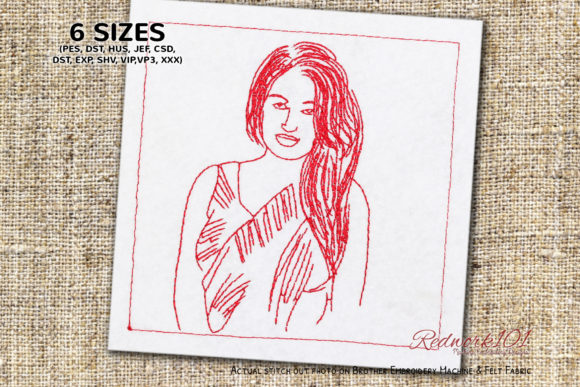
When I first loaded the embroidery file into my editing software, the immediate impression was one of calm. The design features a stylized profile of a woman, defined primarily by the sweeping curves of her long hair. There is no clutter here. The lines are clean, suggesting a modern, minimalist aesthetic that appeals to contemporary buyers. This is not a vintage, overly ornate pattern; it is a Beauty statement that feels current and chic.
The layout is balanced, with the hair providing a natural frame for the face. For an Etsy seller or boutique owner, this visual personality is crucial. It signals quality and taste. It does not scream for attention but rather invites a closer look. This subtlety is what makes it suitable for higher-end custom apparel or delicate home decor items where overpowering graphics might feel out of place.
Real-World Application: From Screen to Stitch
To truly evaluate a design, you must imagine it in a real-life scenario. I recently considered this design for a custom order involving a canvas tote bag design. The client wanted something elegant but durable, suitable for daily use. The Woman with Long Hair was an ideal candidate. Because the design relies on broader shapes rather than microscopic details, it holds up well on textured fabrics like canvas or heavy cotton.
I also tested the concept mentally for sweatshirt embroidery. On a soft, fleece-backed hoodie, the design would sit comfortably on the left chest or as a larger back piece. The flowing lines of the hair complement the drape of the fabric, creating a cohesive look. For baby embroidery projects, such as a nursery blanket or a special occasion onesie, the gentle nature of the image works wonderfully, provided the scale is adjusted to fit the smaller garment.
Another strong use case is the embroidered patch. Patches require designs that are bold enough to be read from a distance. The silhouette style of this design ensures that even when scaled down, the subject remains recognizable. This versatility makes it a valuable addition to your library of design assets.
Technical Considerations and Stitch Performance
While the aesthetic is appealing, the technical execution is where a design lives or dies. The description notes that the "Box Stitch shown in the picture is optional." This is a critical detail for any professional. Optional elements give you control over the final look. If you are stitching on a dark fabric, you might choose to include the box to create a framed effect, acting as a border that separates the design from the background. On lighter fabrics, removing the box can create a cleaner, more floating appearance.
However, we must discuss stitch density. Designs with long, flowing hair often utilize fill stitch patterns to create volume. If the density is too high, the fabric may pucker, especially on thinner materials. If it is too low, the backing may show through. I strongly advise running a test stitch-out on scrap fabric similar to your final project material. Check the tension and ensure the stabilizer you are using is appropriate for the fabric weight. For stretchy fabrics like jersey knits used in t-shirts, a cut-away stabilizer is non-negotiable to prevent distortion.
The mention of satin stitch boundaries or outlines is also important. Satin stitches provide a shiny, raised texture that contrasts nicely with flat fill areas. Ensure that your machine is calibrated correctly to handle these transitions without thread breaks or nesting. A smooth transition between stitch types is what separates a amateur-looking finished product from a professional one.
Fabric and Hoop Constraints
Not every surface is friendly to this design. While it performs well on stable fabrics like cotton, linen, and canvas, caution is needed with highly textured materials like thick wool or terry cloth. The fine details of the face might get lost in the pile of the fabric. Similarly, avoid using this design on very thin, sheer fabrics unless you are using a water-soluble topping to prevent the stitches from sinking into the weave.
Hoop size is another factor. Ensure the design fits comfortably within your hoop with adequate margin for stabilization. If you are attempting to place this on a curved surface, such as a cap, you must digitize or adjust the placement carefully to account for the curvature. Distortion on caps can ruin the symmetry of the face, so always use a cap frame and proper technique.
Commercial Viability and Brand Consistency
For those running a small shop product line, consistency is key. The Woman with Long Hair design offers a consistent visual language that can be applied across various products. Whether it is a holiday embroidery gift, a wedding present, or a standard inventory item for your online store, the design maintains its integrity. This reliability builds customer trust. When buyers see a clean, well-stitched design repeatedly, they associate that quality with your brand.
Furthermore, the design lends itself well to printable mockup creation. Because the lines are distinct, it photographs well for digital listings. High-quality images of the embroidery project on different colored garments can help customers visualize the final result, increasing conversion rates for your digital embroidery file sales or physical goods.
Practical Designer Notes for Best Results
- Test Before You Sell: Always stitch a sample on the exact fabric you plan to use. Check for puckering, thread breaks, and color accuracy.
- Color Contrast: Review thread colors carefully. High contrast between the hair and the background enhances visibility, while monochromatic schemes offer a subtle, tonal look.
- Check Licensing: Before selling items made with this design, confirm the license terms. Ensure you have the right to use it for commercial embroidery purposes.
- Mockup Testing: Test the design in black and white mockups to ensure the shape holds up without color reliance. This helps identify if the silhouette is strong enough.
- Stabilizer Selection: Match your stabilizer to the fabric. Use tear-away for stable wovens and cut-away for knits.
Final Verdict
The Woman with Long Hair is a thoughtful, well-balanced addition to any designer’s toolkit. It bridges the gap between artistic expression and practical application. It is not just a pretty picture; it is a functional applique design or standard stitch file that respects the limitations of the medium while maximizing visual impact. For the personalized gift maker or the seasoned apparel decorator, this design offers the reliability and elegance needed to create products that customers cherish. Just remember to respect the technical requirements of your machine and fabric, and this design will serve you well in your creative endeavors.