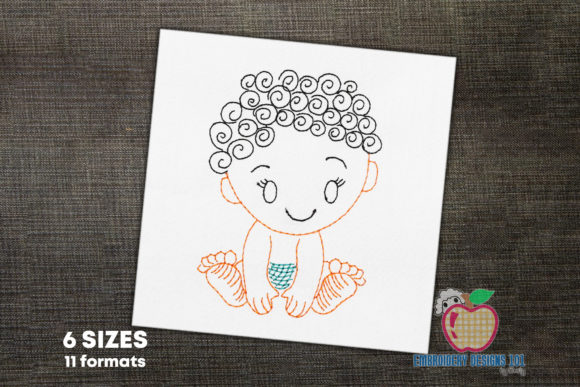
Cute Baby Sitting: A Designer’s Review for Merch
As an embroidery designer who has spent years digitizing and reviewing files for commercial use, I approach every new machine embroidery design with a critical eye. It is not just about whether the image looks cute on a screen; it is about how that design translates to fabric, how it holds up in a wash cycle, and ultimately, how it serves a business owner’s brand. Today, I am taking a close look at Cute Baby Sitting, a design categorized under Boys Embroidery, to determine its viability for small business merchandise, branded patches, and custom apparel.
The product description highlights that this adorable embroidery of a baby is perfect for decorating nursery rooms, baby bibs, pajamas, and more. It claims to be fun and easy to stitch onto any fabric you choose. While these are excellent starting points for hobbyists, my review focuses on the commercial potential. Can this design elevate a boutique’s product line? Does it work as a subtle accent on staff uniforms? Let us dive into the practical application of this digital embroidery file.
First Impressions and Visual Personality
When I first loaded the preview for Cute Baby Sitting, the immediate impression was one of approachability and warmth. The design leans heavily into a playful and handmade aesthetic. For businesses targeting parents, nurseries, or family-oriented services, this visual personality is a significant asset. It does not scream "corporate" or "industrial"; instead, it communicates care, softness, and attention to detail.
However, from a professional standpoint, "cute" can sometimes translate to "cluttered" if the digitizing is not precise. The success of this design in a commercial setting depends entirely on the balance between detail and simplicity. If the lines are too thin or the color transitions too complex, it risks losing definition when scaled down. My initial assessment suggests that this design works best when allowed to breathe, rather than being crammed into a tiny space where intricate details might merge into a blob of thread.
Real-World Business Applications
For small business owners, particularly those in the baby and children’s sector, Cute Baby Sitting offers several high-value applications. Here is how I envision this design performing in real-world scenarios:
- Embroidered Patches: This is perhaps the strongest use case. By stitching the design onto twill or felt and cutting it out, you create a versatile embroidered patch. These can be ironed or sewn onto diaper bags, stroller covers, or sold as standalone accessories. Patches allow for quality control before application, ensuring the finished product meets your standards.
- Boutique Merchandise: For Etsy sellers and handmade brands, this design is ideal for baby bibs and burp cloths. The description explicitly mentions bibs, and rightly so. A well-executed embroidery here adds perceived value, allowing you to charge a premium over plain cotton items.
- Staff Uniforms and Aprons: Imagine a daycare center, a pediatric clinic, or a family photography studio. Using this design on the chest pocket of a staff shirt or as a corner accent on an apron embroidery project creates a cohesive brand identity. It signals to clients that the business is child-friendly and professional.
- Tote Bag Design: Canvas tote bags are popular for baby showers and gift sets. Placing Cute Baby Sitting centrally on a tote creates a memorable keepsake. Ensure you use a heavy cut-away stabilizer to prevent the bag fabric from puckering under the weight of the stitches.
Technical Considerations and Placement
While the design is described as easy to stitch, experienced decorators know that context is everything. There are specific scenarios where you must exercise caution with Cute Baby Sitting.
Cap Embroidery requires special attention. Caps have a curved, structured surface. If this design has a wide footprint, it may distort when stitched on a cap front. I recommend checking the width of the design against your standard cap hoop. If it is too wide, consider resizing it, but be wary of losing detail. Additionally, the stitch density must be appropriate for the thick fabric of a cap; too many stitches can cause the cap to buckle.
Fabric Texture also plays a crucial role. The description states it is easy to stitch onto any fabric, but I advise testing on textured materials like terry cloth (for towels) or waffle knit (for pajamas). On loose weaves, fine details may sink into the fabric. Using a water-soluble topping can help keep the stitches on the surface, ensuring the baby’s features remain crisp and visible.
Furthermore, consider thread colors. If you are stitching this on dark uniforms, you will need high-contrast thread colors to ensure visibility. A pastel design on a navy blue shirt may get lost. Always create a printable mockup or do a physical test stitch on the actual garment color before committing to a large production run.
Enhancing Brand Identity and Trust
Why does the choice of design matter for small business merch? Because consistency builds trust. When a customer sees the same high-quality Cute Baby Sitting embroidery on a bib, a tote bag, and a welcome sign, it reinforces your brand identity. It shows that you care about the details.
High-quality embroidery elevates a handmade product from a simple craft item to a premium good. It suggests durability and effort. For commercial embroidery projects, this perception of quality can justify higher price points. Moreover, unique design assets like this help differentiate your products from mass-produced alternatives found in big-box stores. It gives your brand a human touch, which is invaluable in the baby and children’s market.
Practical Designer Notes for Production
Before you purchase and start stitching, here are my professional recommendations to ensure success with this embroidery file:
- Verify Technical Specs: The provided description does not list exact stitch counts, file formats, or hoop sizes. You must check these details with the seller. Ensure the file format is compatible with your machine (e.g., PES, DST, JEF).
- Test Stitch First: Always run a test stitch on a scrap piece of the same fabric you intend to use. Check for thread breaks, nesting, or registration issues.
- Stabilizer Selection: Use the correct stabilizer. For stretchy fabrics like pajama knits, a cut-away stabilizer is essential to prevent distortion over time. For woven fabrics like tote bags, a tear-away may suffice.
- Commercial Licensing: Confirm the license terms. Since you are using this for commercial embroidery and selling finished goods, ensure the license permits commercial use. Never assume; always read the fine print.
- Mockup for Approval: If you are doing this for a client, create a digital or physical mockup. Show them how Cute Baby Sitting looks on their specific garment. This manages expectations and reduces revisions.
In conclusion, Cute Baby Sitting is a charming addition to any designer’s library, particularly for those serving the juvenile market. Its strength lies in its emotional appeal and versatility across various custom apparel and accessory items. However, its success in a business context depends on technical execution. By paying attention to placement, stabilizer choice, and fabric compatibility, you can transform this simple design into a powerful tool for brand building and revenue generation. Treat it with the professional rigor it deserves, and it will serve your business well.